Holy Grounds of Symphony

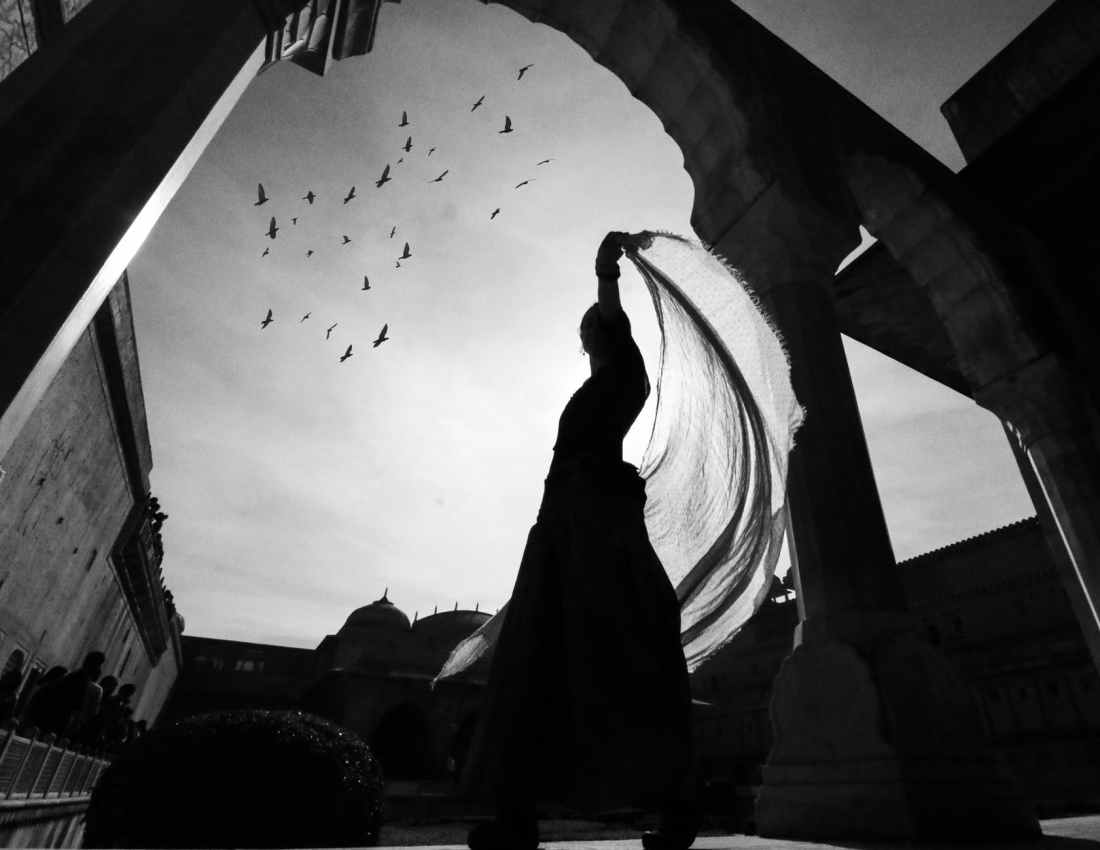
low angle view of silhouette of woman standing near building
Photo by vishnudeep dixit on Pexels.com

As crystal clear as the truth is;

You’d think I’d freely immerse myself in its depths

But I’ve been dancing in a whirlwind of drama for ages,

Eons it seems

Searching for one who’s step is in sync with my own

At first we march to the beat of the drum

Twirl in each others arms

Open up our wings to the sky and set off on our flights

The harshness of the wind causes us to vanish

Feathers scuffled in the freight of the storm

Each time, The One nurtures

Encouraging a new step,

A new dance

Marching once again to the symphony of hearts

Whirling my hips round and round

Enticing, calling, seducing

he watches the dance with a gaze of curiosity

Longing and passion

Meeting me halfway matching each step melodramatically

Praying to capture

To engulf

To possess

Each one circling one another, waiting to pounce

Too soon…we encounter destruction

Jumping off the edge, plunging to equal depths

What good is the dance if it does not end in harmony?

In laughter, in intimacy, in flow

As I float in the earths wetness

Confounded and oh so weary

Salt nurses each wounds to bind

God leads me to the earth

Sets us me up on my knee’s

And whispers “practice makes the moves perfect,

But love makes the dance appreciated

I’ve taught you each step so that they all lead to me;

What other gift need you then this?”

Overcome with arousal for tango’s uncherished

I release all presumption, intending to find my own rhythm

My arms moving,

hips circling,

smile beaming

As the ocean washes up my shoes

Beckoning to begin the dance once again

Accepting Responsibility

choices decision doors doorway
Photo by Pixabay on Pexels.com

You know the saying “with great power comes great responsibility”?

Each person is incarnated into this existence with an ego and a soul. The ego, operates in the form of “I”, which is important because it allows for us to have an experience of the world which is personable. In almost every religious and spiritual view, each person is fully liable and responsible for themselves. This means that each individual has personal accountability for acquiring each of their needs. The ego seeks to fulfill these needs through external means: validation, romantic love, money, fame, etc. This, as many people come to understand, is extremely problematic because external means are fluctuating, fleeting and conditional. For example, people give love at the capacity they are able to love themselves. In almost every instance, to give love to another human being is usually fully dependent on the individuals ability to find beauty, likeness, admiration and thriving “acceptable” traits in another person. This is the meaning of conditional love, which is fully dependent on the ability of the opposite person to fulfill one(or more) of the ego’s needs.

The soul, however, is believed to be derived from God/All That Is. In many Abrahamic religions, God has been said to have blown a piece of his Spirit into man and with that– completed His wonderful creation. Within this context, it is important to comprehend that the soul is whole on its own. It is timeless. It can love unconditionally because it is directly derived from a being whom is limitless and unconditional in His existence. Nevertheless, the only “need” the soul has is to be in connection with God. This need cannot be fulfilled by external means: it’s contentment is found in the acquisition, communion and connection to The One. And because God is everlasting, this wholeness is everlasting as well.

Why is this important? When attempting heal to core wounds, it’s important to fully comprehend their roots. For example, a person who’s experienced childhood abandonment often has a distorted view of fault vs. responsibility. Fault is the belief that you control others and the choices they make. Responsibility is the ability to take accountability independently of others. The ego of a young child experiencing abandonment has not yet matured enough to understand that the actions of others do not serve as reflections of their own worthiness. The ego takes fault and thinks to itself, “Their absence is a result of my doing. I must not be good enough” and experiences feelings of guilt, shame and fear, which confirm its self-imposed suffering. The person then grows up seeking validation from external means in order to prove its worthiness to themselves. But no matter how much validation they receive, it will not heal the core wound of unworthiness.

This story of lack in it itself is an illusion created by the ego. The fact is that no one thinks about you as much as you do. This means that other peoples actions are often self-serving and not a personal attack on another being. The journey of each person is to fight off mental attacks from the psyche and shatter the ego’s illusory perceptions.  This takes time. If a person has been living in the ego’s illusions for years it will often take just as much time to unlearn their beliefs and rewrite their own reality. The wonderful thing about the human mind is that perception is individualistic to each being. While we are not responsible for the actions, ideals and perceptions of others we are responsible for ourselves. With this knowledge can come great relief; that our personal power is not dependable on another persons intrinsic reality—but our own.

Memorial

asphalt dark dawn endless
Photo by Pixabay on Pexels.com

Can you believe

That in the totality of my existence

There are moments of disconnection

Distractions

When I forget Gods name

The One permitted my lungs to breathe

Dragging air in and out of my being

And in those distractions

I seemingly crack the code

Finding life’s meaning

Turning to the mirror to look inward;

In those moments

Of disconnection

In the deepest discord

I look to my job;

My money, my family, my lovers

Searching for my muse

Beautiful distractions, are they not?

But distractions are distractions

Please tell me,

What fool looks at the stars and says,

“Yes! This is worthy of all my worship and devotion”

For who’s the creator of the stars?

And what romantic looks at another person,

And says;

“I can’t live without you. I will die without you”

I’m sorry

If there is one thing life continuously shows me

Again and again

I can exist without money, clothing, shelter

But I can not- for the life of me

Exist without The One

Loving me

Nurturing me

Providing for me

In the deepest parts of me

The greatest love story there will ever be

The One and me

Healing the Emotional Body


close up photography of man s face at night time
Photo by Dương Nhân on Pexels.com

When a person commits to recovering from trauma, a holistic assessment and healing of the human psyche are often needed. The human psyche is made up of:

  • Physical body – Biological and physiological needs such as air, food, water, warmth, sleep, etc.
  • Conscious/Unconscious mind – Thinking, knowledge, information, reasoning, cognition, understanding, perception and memories
  • Emotional body – Feelings, emotions, sensations, passions, desires, and experiences

When experiencing trauma, memories are instantly stored in the conscious/unconscious mind and emotional body. The same way our memories have an imprint on us, so do our emotions. Emotions hold information. They are reactions to the deep memories and thoughts about our experiences and its effects. The emotional body is integral because it allows for man to experience his thoughts, memories, and reality in a way that goes deeper than simply thinking. Feelings translate our thoughts and perceptions of reality into the embodiment of experiences: in the first person. In other words, emotions and feelings make our experience one that is personal. Nevertheless, as the human body and mind are interconnected, emotions can determine decision making, thoughts, and behaviors. They ultimately serve as alerts to our psyche with clues and information on things that may harm, help or excite us.

In therapy, the act of conceptualizing, rethinking and logically deciphering traumatic events is essential to healing the conscious mind. In essence, in order to heal from psyche damage, many humans need to logically reason and understand the experiences they’ve had. However, just as important is the emotional body which imprints and stores feelings in the psyche and therefore affects the conscious mind.

For example, one who may have had the occurrence of an absent parent usually reports feeling the emotion of abandonment. Abandonment is a subjective emotional state that is characterized by feelings of insecurity, loss, fear, sadness or undesirability. A child experiencing abandonment often does not have a conscious understanding to make sense of what is they are feeling. In addition to this, the conscious mind is born as protective and will innately react to the negative feeling of fear and shield the child from experiencing that emotion. Therefore this feeling and experience get stored away into both the unconscious mind and the emotional body.

This child will continue to grow up with feelings of inadequacy, being undesirable, fear of loss, sadness, and insecurity. Because the conscious mind was so protective, it would’ve have stored the memory and feeling deep into the unconscious and emotional body, disabling the growing child from being able to cognitively process and experience those negative emotions. What do you think happens next? Yes, in search for healing, the child will then unconsciously seek out situations in which the psyche replays the story of abandonment over and over again.

In order to heal, one must dig into the emotional body and allow for those old emotions to come up in order to be experienced and united. There are various techniques for fostering this integration with one being the meditative practice of “sitting with one’s emotions”. Here is the technique I use for this practice.

  1. Sit comfortably, cross-legged or in a chair with feet planted firmly on the ground
  2. Breathe deeply into both nostrils, in and out
  3. Bring up the memory/core issue that wishes to be explored
  4. Tune into the body as this memory comes up. Ask yourself “What emotion am I feeling?” Take the time to feel this emotion as it courses through your body. Do not try to guide your thoughts or change your emotions. Simply let it take its course.
  5. Now ask “Where in the body is this feeling? What does it feel like?” You are familiarizing yourself with this unique bodily feeling so that you will know what emotion you are experiencing if it comes up again in the future.
  6. Next, ask “Where did I first experience this emotion?” If nothing comes up at this point, that is fine. Sometimes we are unable to remember exactly when we first experienced an emotion. Simply allow for the feeling to come up, in order to experience it.
  7. Say that emotion “I hear you. I am here with you. I support you. You are allowed to feel.”
  8. Reconstruct the memory into what you think you NEEDED at that time in order to feel your best. This will be personal for each person, so allow for your feelings to guide you and not your conscious mind. Your emotional body knows best what it needs.

Healing the emotional body does not happen in one sitting. Many people are unaware of the fact that there are years of emotional trauma that must be experienced, healed and integrated. Take all the time you need to foster this union. Healing is a journey that one must take for the course of their life not a single destination.

Balancing Work, Play and Rest

yooo copy

Have you ever felt depleted or burnt out from being a little too social?

I love people. I enjoy my work, I love my friends, my family, I love laughing and creating memories. But being around many people for extended periods of time also really drains the hell out of me. While I’m able to enjoy being present, engaged and charismatic in social groups, I’m also cognizant of the constant need for grounding and solitude that plights me each time I interact extensively with another person.

It’s actually quite common to lose energy from being around people for extended periods of time. While everyone is admittedly unique in their own way, this phenomenon often gets categorized into ‘introversion’. To add to that, being a highly-sensitive person also comes with the caveat of also being sensitive to feeling others energy, emotions or tension. As a result of being so open to life experiences and emotions, it can often be quite overwhelming if one is unable to ground themselves.

In social situations, the brain is stimulated and dopamine gets released. Dopamine is a neurotransmitter which helps regulate the brain’s pleasure and reward system. It is also linked to the sympathetic side of the nervous system, which puts us in a state of full throttle or “fight or flight”. ‘Extroverts’, in particular, have a more active dopamine reward network so they need more dopamine in order to feel pleasure. Introverts, however, don’t need much stimuli in order to experience excitement or pleasure. In fact, when dopamine gets flooded into their brain and the body responds to excitement they also feel quite overwhelmed!

The most interesting part of this is that the ‘introvert brain’ is more favorable to another neurotransmitter that is linked to the brain’s pleasure center, called acetylcholine. Acetylcholine is linked to the parasympathetic side which is responsible for “rest and relaxation”. So how do introverts thrive and receive the most pleasure in their daily life? Turning inward, being quiet, in solitude and relaxed. This is key to understand because introverts are not stealing away moments of silence or solitude because their loved ones are intolerable to hang around. Alone time is simply what they need in order to recharge.

While I adore being around my loved ones sometimes I need space to feel all of my own energy. It is important to cultivate a balanced routine in which one is able to experience the love, laughter, and joy their social network/connections bring but also pull back enough to recharge and restore. The best way we can serve others is by pouring love, rest and care into ourselves first. So go ahead; take a couple of hours of silence and enjoy the energy others are eagerly expecting you to bring to their presence. If you don’t show up for yourself, how can you for anyone else?

References: The Science behind Introversion and Extroversion