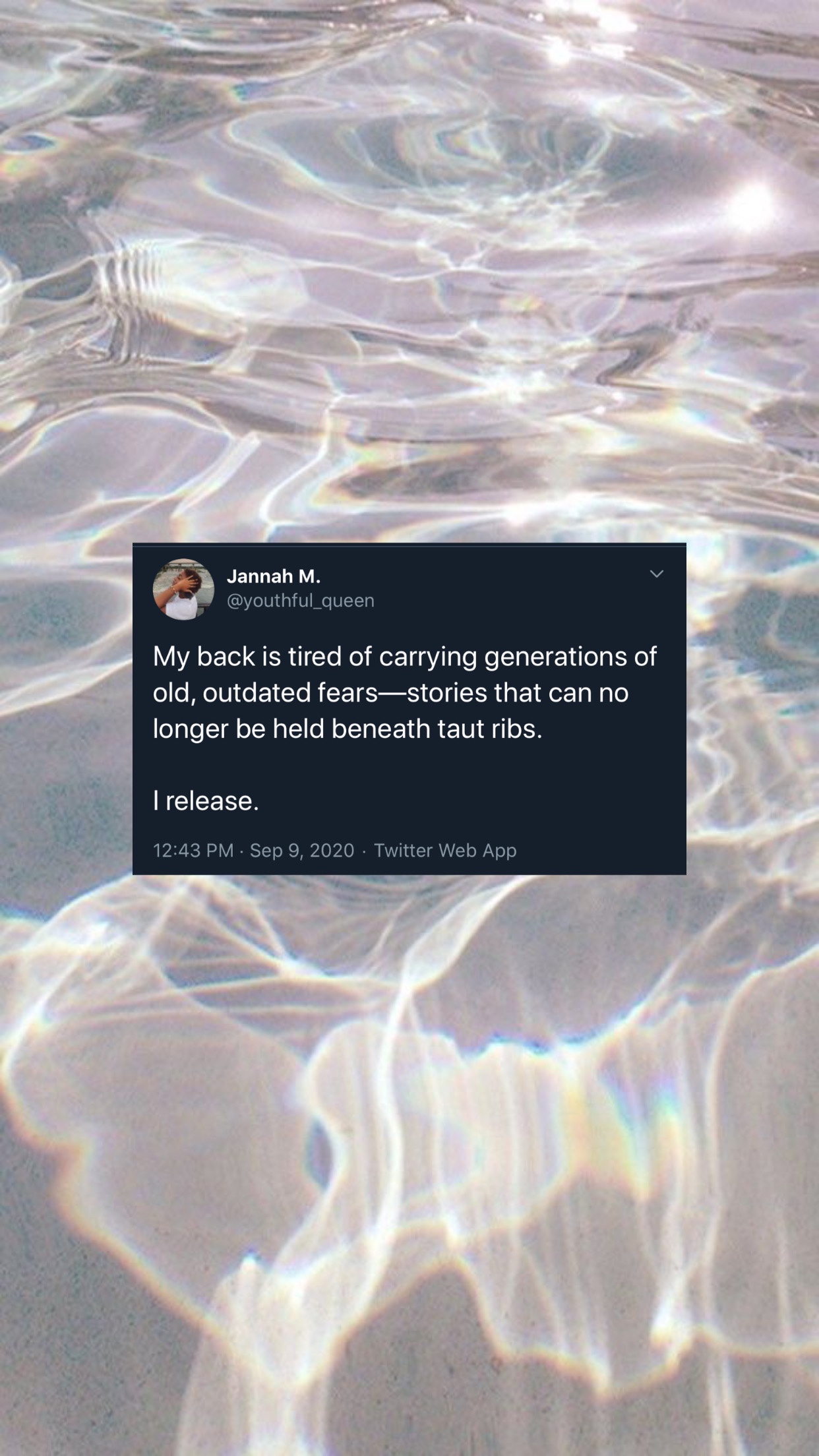
2020 Reflections—The Power of Resilience

2020 has been interesting.

Okay, I say interesting and I know many of you may be thinking “how about, horrible”.

Honestly enough, 2020 has been one of the most unpredictable, crazy and amazing years of my life. This year was paved with opportunity for distraction, misinformation, programming and difficulty. But it was also paved with deeper connection, truth, love and assistance. And as I continue to reflect on the lessons in this current stage of my life, I also realize how resiliency has been such an important characteristic to be able to manage during a time like this.

And brace yourself, its only about to get more heated.

However, internally I found myself tuning into a quiet place of solitude, rest and recovery that I’d had previous glimpses of existence. This brought me back to other cycles of my life, where I’d truly learned the meaning of connection. Solitude being a place of restoration for me, where I can put my guard down and confront myself. See myself in its rawest form. I fell in love with what God created. And in this love, I began to choose better for myself. I began to see that who I was is a beautiful result of God’s handiwork. Looking into intricate pieces of how the total came together; how one thought influenced a whole reality, how if one image or symbol changed – it reforms the whole story.

And then come the difficult parts. The witnessing self-sabotaging behavior, your fear, your judgement, your shame. Its okay, we all have it – I do too. These are truths that often we want to ignore in ourselves. But at the place of the wound is the potential and medicine to heal it. This is what is means to have resilience. It means to have the ability to forgive, to bounce back from hurts and most importantly—to move forward.

Resilience requires a bit of faith. It’s the movement that allows for us to fully process stimuli, emotions and stories. It allows for us the benefit of being able to tune into surrender, then flow. And if anything was needed this year, it was to have the ability to flow. To have courage and faith. To try our best and know that sometimes that isn’t good enough. And knowing that that’s okay. To give a helping hand and kind words. To be understanding and patient. To see another smile on another’s face. To fully tune into living and loving. This is what its all about.

So as we close 2020, I pray for each of you the gift of resilience. This year has been a tough one and if you’re reading this than I owe you a congratulations. You graduated.

Now, onto the next level. And for this, resilience will need to be in your toolbelt.

Peace, love and much blessings,

Your sister,

Jannah.
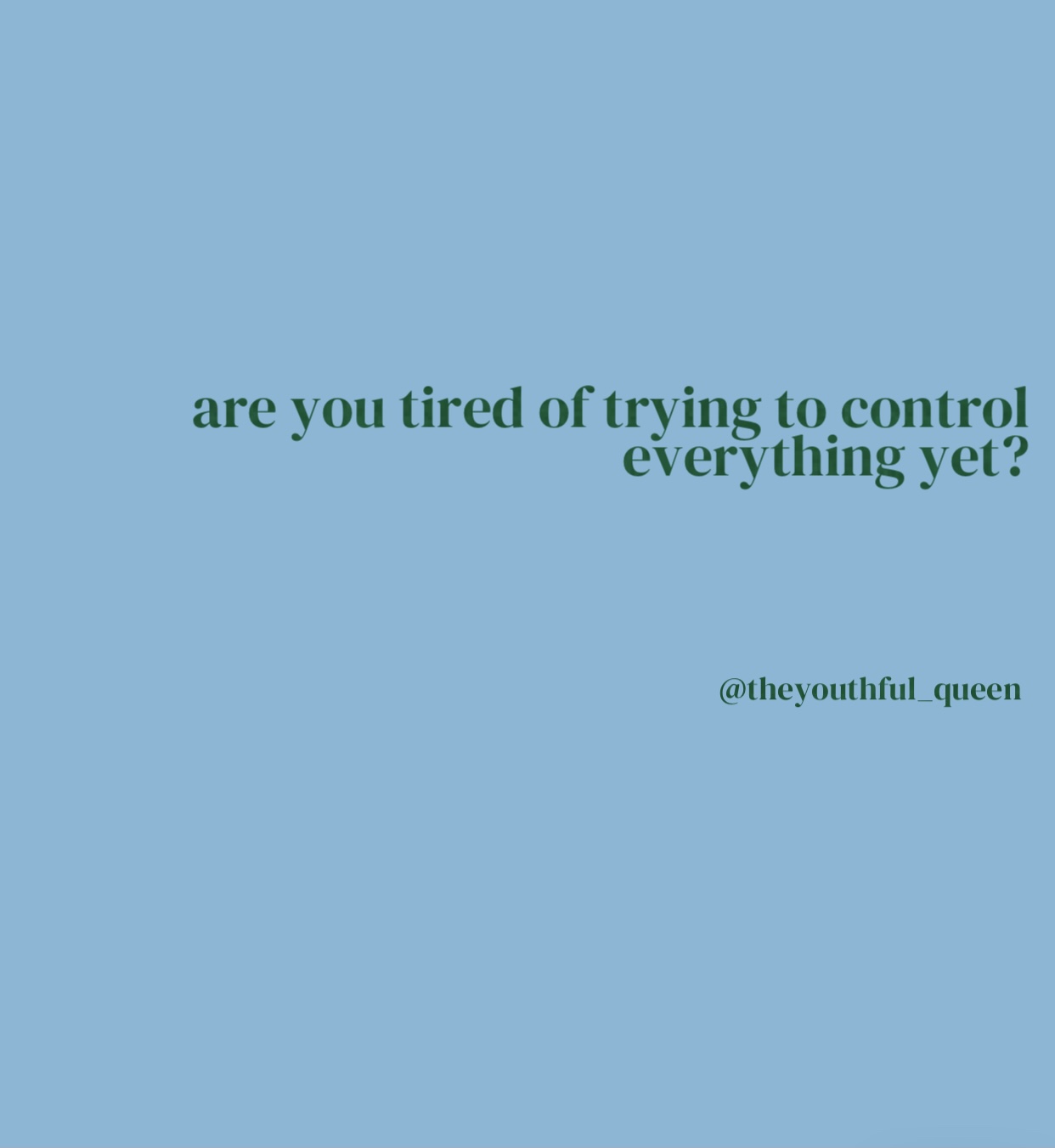
The Art of Being in Flow

Do you really trust your Creator?

Do you even trust yourself?

From self-observation, one will find there are many ego games at play all in one instance. When we talk of surrender, we literally mean the ability to be able to completely relinquish control— or the illusion of such in which we place our faith in the hands of our Creator. Surrender requires trust: understanding that God’s plans are much more unbounded and perfect than our own. Some may say that they find surrender on the mat in the midst of yoga. When one contorts their body into pretzel-like poses or even a simple leaning forward onto stretched out legs, feeling muscles pulse in their struggle to release its hold, break, tear and form deeper into this shape.

Or perhaps surrender comes during that moment in meditation where words become sparse and one begins to hear sounds circling around them. Listening to cars whiz by; laughter from children across the street at a playground; birds in flight, the wind carrying melodious chirps or; a slight ringing sound of silence. In those moments where oneself begins to blend with the world around them, the realization that separation is the mass hallucinogenic illusion we’ve all implicitly agreed upon becomes ever so clear.

Maybe surrender arrives in the midst of prayer. When a chant and intention becomes vibration—pulsating across a thousand membranes and cells implanting itself through muscle memory. Our voices mirroring the very tremors that shaped the universe. With Gods name heavy on our tongue, hearts begin to tremble at the humble awareness of the familiar essence of its Creator. Reverence becoming our name, we bow our heads in humility understanding our own creation and God’s mercy in manifesting us.

In reality, many humans have issues with surrender in many aspects of daily living. Perhaps it’s a trouble to commit to a routine, to acknowledge our imperfection, a negligence to pull ourselves from self-importance, a lack of humility, difficulty with bowing our heads in prayer or even admitting that we do not have all of the answers.

The lesson of surrender arrives in many forms; in many that we have endured during this very year. As difficult as it may get, I am keen to remember that surrender often arrives in places where God seeks to be revered. In these spaces, we are asked to drop the force of “personal will” to allow something much bigger and wiser than ourselves to emerge. We are joined with the force of nature which knows no illusory separation and fully submits itself to the will of the Creator, following His commandments. And due to this submission, nature poses as eternally and infinitely beautiful—a reflection of God Himself which stands as a reminder to those whom seek wisdom. This wisdom allows for us to reclaim the seat of our being, causing the to submergence into submission and reemerge of our likeness of God, thus returning to our own timeless divine nature. In this we never fear the illusion of death as we return to infiniteness.

Thus our very breath turning into a return, reverence and prayer to The Most High.

Dissolving Illusions— A Process of Psychological Deprogramming

Fraught with fear, each of us has been the victim of deep programming that has taken place over the course of millennia. With our descent into this earthly plane, we have been sold this story of illusion where we were stripped of divine nature and placed into a universe that was somehow separate from us. Never mind that we contain all of the stuff that the universe is created from, no—we were sold this story of separation, creating disillusionment and amnesia of who we truly are.

Are you ready for remembrance?

Over the course of the past three years, I’ve been diving deeper into the spirituality of my native peoples. My forefathers and foremothers knew of no belief that created division but only of the One true Creator from which all of Creation derives. This Creator could be found mirrored in all of creation, as the patterns in trees modeled the pattern in human anatomy, veins coursing through taut skin make from earths dirt like roots running in the core of Gaia. A mirror of all of creation, reflections posing back up to the Creator. This spirituality forgotten the longer we stayed on this earthly plane and began to create the illusion of separateness through category, different symbols, language, culture and of course, race.

At the core of it all, we are all one, each seeking a place to call home. In their disillusionment, many may search for home in a place, a country, a temple or even a persons arms. Search we may, the answer is certain. As we continue to have this communal experience with everything in nature speaking back to us, our home is and has always been in the One from which we were never separate. In the One whom exists when all ceases to endure, when play ceases to continue and the curtains close. The witness, ever present and ever knowing.

The deprogramming is dissolving the illusion of separation created by egoic chains. The ego wishes to create this illusion of separateness to maintain the arrogant story of self-importance. In truth, we are important because we are One, not separate into fractal pieces each fighting for selfish power and domination. The infinite connection is a birthright known by our ancestors, a hidden truth they’d fought to understand. The true seeker understand that there is no truth to be sought. It has always been within, waiting to be recognized.

And so it has always been. We are here. We are whole. We are one.

Accepting Responsibility

choices decision doors doorway
Photo by Pixabay on Pexels.com

You know the saying “with great power comes great responsibility”?

Each person is incarnated into this existence with an ego and a soul. The ego, operates in the form of “I”, which is important because it allows for us to have an experience of the world which is personable. In almost every religious and spiritual view, each person is fully liable and responsible for themselves. This means that each individual has personal accountability for acquiring each of their needs. The ego seeks to fulfill these needs through external means: validation, romantic love, money, fame, etc. This, as many people come to understand, is extremely problematic because external means are fluctuating, fleeting and conditional. For example, people give love at the capacity they are able to love themselves. In almost every instance, to give love to another human being is usually fully dependent on the individuals ability to find beauty, likeness, admiration and thriving “acceptable” traits in another person. This is the meaning of conditional love, which is fully dependent on the ability of the opposite person to fulfill one(or more) of the ego’s needs.

The soul, however, is believed to be derived from God/All That Is. In many Abrahamic religions, God has been said to have blown a piece of his Spirit into man and with that– completed His wonderful creation. Within this context, it is important to comprehend that the soul is whole on its own. It is timeless. It can love unconditionally because it is directly derived from a being whom is limitless and unconditional in His existence. Nevertheless, the only “need” the soul has is to be in connection with God. This need cannot be fulfilled by external means: it’s contentment is found in the acquisition, communion and connection to The One. And because God is everlasting, this wholeness is everlasting as well.

Why is this important? When attempting heal to core wounds, it’s important to fully comprehend their roots. For example, a person who’s experienced childhood abandonment often has a distorted view of fault vs. responsibility. Fault is the belief that you control others and the choices they make. Responsibility is the ability to take accountability independently of others. The ego of a young child experiencing abandonment has not yet matured enough to understand that the actions of others do not serve as reflections of their own worthiness. The ego takes fault and thinks to itself, “Their absence is a result of my doing. I must not be good enough” and experiences feelings of guilt, shame and fear, which confirm its self-imposed suffering. The person then grows up seeking validation from external means in order to prove its worthiness to themselves. But no matter how much validation they receive, it will not heal the core wound of unworthiness.

This story of lack in it itself is an illusion created by the ego. The fact is that no one thinks about you as much as you do. This means that other peoples actions are often self-serving and not a personal attack on another being. The journey of each person is to fight off mental attacks from the psyche and shatter the ego’s illusory perceptions.  This takes time. If a person has been living in the ego’s illusions for years it will often take just as much time to unlearn their beliefs and rewrite their own reality. The wonderful thing about the human mind is that perception is individualistic to each being. While we are not responsible for the actions, ideals and perceptions of others we are responsible for ourselves. With this knowledge can come great relief; that our personal power is not dependable on another persons intrinsic reality—but our own.

Self-compassion and change

nature red forest leaves
Photo by Pixabay on Pexels.com

So, you didn’t get that job or apartment that you wanted and now, you have a collection of reneged offers, rejection letters, and acquired hopelessness. We’ve all been there. You’re in the process of a huge transition and receiving bad news doesn’t make the change any easier. “Is this meant to be? Should I keep going?” you may ask yourself. Life surely doesn’t promise us immediate happiness and success, however, it does promise that it will change. Constantly.

Life transitions can foster fear, unease and discomfort. As an emerging adult, I can personally attest to this rollercoaster of a transition into adulthood. My main take away from the wisdom adulthood brings  is:  life will often be confusing and unstructured. In a nutshell, life will bring many necessary times of transformation, which can often bring about — yes, you guessed it — stress.

So here is the big question; what can we do to ease stress? Research shows that the main supporters for managing stress is optimism and self-compassion. Nevertheless, positive self-talk in the form of self-compassion and self-kindness reportedly increases well-being and decreases stress (Neely et al., 2009). Brisette et al. (2002) also reports that greater optimism leads to greater use of active coping, planning and positive reinterpretation and growth.

Here are some tips that may be helpful in fostering self-compassion and optimism throughout stressful transitions:

Life is unpredictable, accept it: We’ve already discussed that life is vastly unpredictable and tools to cope with that unpredictability. Acceptance of unpredictability allows for one to let go of the illusion of control. With this, we allow ourselves space to experience variability throughout life transitions instead of judging or berating ourselves when things don’t go as planned.

Compulsive negative thinking vastly affects productivity, motivation, and outcome: Negative thinking is normal, however compulsive negative thinking without correction can be detrimental. Practices of judgment and resistance of one’s negative thoughts often result in a greater internal struggle. It is essential to give yourself self-compassion. By using the practice of self-compassion in our self-talk, we allow ourselves to be human. Express doubts, actively observe w/o judgment and finally, apply empathy to the parts of yourself that are speaking out of fear. Often, fearful and negative thoughts represent a part of ourselves that want to protect us from suffering or disappointment. Send that part some compassion and reassurance. It is perfectly okay to be afraid; it’s apart of the process.

Use your failures as leverage: You’ve had 4 interviews within the last month and didn’t land any of those jobs. Perhaps now you feel frustrated and hopeless? That’s okay. Give yourself space to feel these emotions. Then, use those failures as leverage. Does your resume need tailoring to fit the job? Were you asking engaging questions to your interviewer? Can you create a portfolio of your creations and accomplishments? It’s important to allow room for failure because these failures (while they may suck) allow us to learn from and rectify mistakes that we have made. Every failure is a lesson — use it as such.

Be realistic: Its great to be positive and to believe that things will always work out for us, but using discernment is just as important. Knowing and understanding our boundaries is a pivotal lesson in self-care. Don’t ignore real difficulties with the hope that everything will go perfectly. Take precautions and move with calculated intelligence. That too is a huge part of embodying mature optimism.

Cultivate hope and faith: Faith and hope are two things that are essential in maintaining optimism. Do you have a belief in something or someone higher than yourself? Can you ask this being to strengthen you in hope and faith? Can you, for one second, visualize a better you? Who would you be? How would you get there? This is your life. You have all of the cards in your hand to create a better (or worse) future for yourself. Hope is a choice. It takes courage to wish and focus on goodness when the cards you’ve been dealt are the worst. But perhaps a bit of courage is all that one needs to move out from the rain of the storm into the warmth of the shelter.

References:

Arnett, J. J. (2015). Emerging adulthood: The winding road from the late teens through the twenties (2nd ed.). New York, NY: Oxford University Press.

Brissette, I., Scheier, M. F., & Carver, C. S. (2002). The role of optimism in social network development, coping, and psychological adjustment during a life transition. Journal of Personality and Social Psychology, 82(1), 102–111.

Neely, M.E., Schallert, D.L., Mohammed, S.S. et al. Motiv Emot (2009) Self-kindness when facing stress: The role of self-compassion, goal regulation, and support in college students’ well-being. 88. https://doi.org/10.1007/s11031-008-9119-8